Grease-related drain clogs are very common in eateries and restaurants, but they are also not uncommon in households, especially after parties. The fastest way to deal with this situation is to use specialized grease drain unclogging chemicals.
Why should toxic chemicals still be used?
Although you can find countless tips from the online community about DIY unclogging methods using hot water or readily available ingredients, and sometimes even environmentally friendly solutions, unfortunately, even after trying all these helpful methods, your pipes may still remain clogged or only be effective for a short time. That is when you should use chemicals to deal with grease buildup inside the pipes.
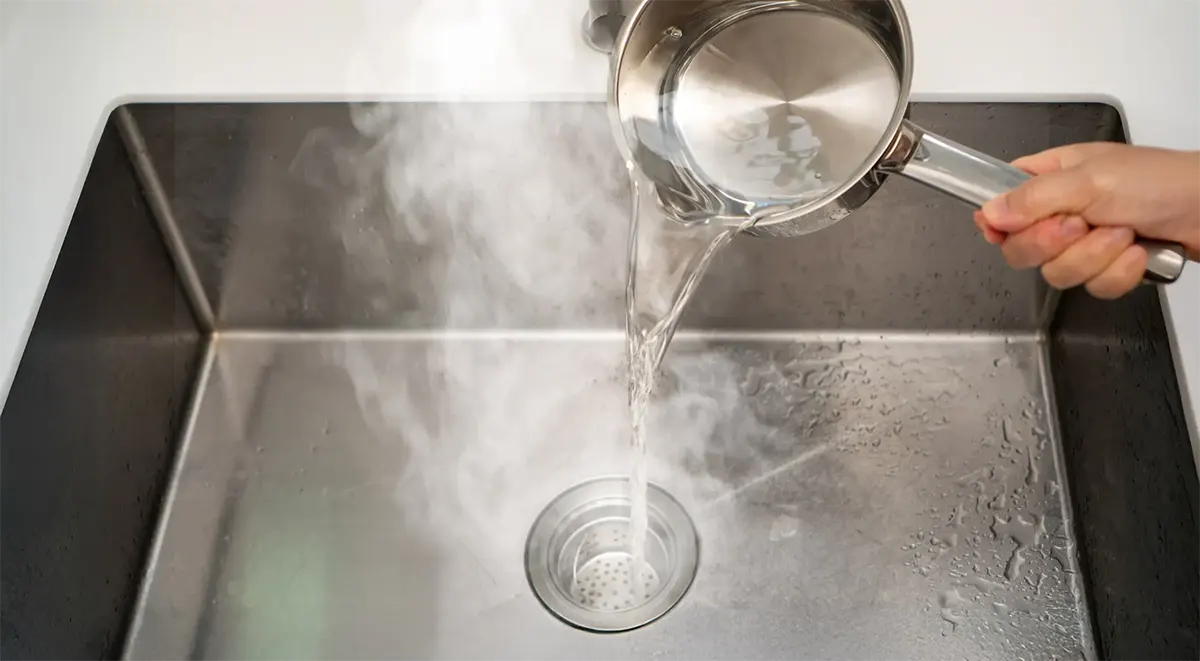
Hot water can help clean away dirt and residue. However, this method has difficulty removing grease that has built up inside the pipes. Photo: Wind River Environmental.
It is not without reason that grease drain unclogging chemical brands such as EcoSock, Botek, Sifa, Hando, Sumo, or Tracatu are so popular with consumers. You might think this is because many people are unaware of their harmful nature, but in reality, consumers are smart enough to recognize it. Anyone knows that drain cleaners always carry safety risks for users and are not environmentally friendly. However, when viewed from different perspectives, the products mentioned above offer many advantages that help “win over” customers:
-
Effective against stubborn buildup: At first, grease entering the pipes is usually in liquid form and may not seem dangerous. However, thanks to its strong adhesive properties, it sticks along the pipe walls, especially at bends, which are its favorite spots. Over time, grease accumulates, becomes oxidized, and hardens into thick layers that are very difficult to remove using only hot water or baking soda. Moreover, these grease layers act like glue, attracting dirt and waste in the wastewater and further increasing the size of the buildup.
-
Fast and noticeable results for severe clogs: In essence, chemical drain cleaners work by creating a controlled corrosive reaction that softens and breaks down the buildup causing blockages inside the pipes. Specifically, when they come into contact with obstructions such as grease, food waste, or soap residue, the chemical molecules penetrate each layer of organic matter, break internal bonds, gradually soften it, and then dissolve it into smaller particles that can be washed away by water.
-
Effective even in hard-to-reach blockage locations: When grease clogs are located deep inside the pipes, household tips are clearly ineffective, while plungers or drain snakes may not work well because the cable may not be long enough and the pipes may have bends that are difficult to navigate. In contrast, grease drain unclogging chemicals can flow along with water and easily reach the clogged area. Not only that, wherever the cleaner flows, buildup is removed there.
-
Low initial cost: Treatment cost is something you may consider carefully when comparing the expense of hiring a plumber versus buying a bottle of drain cleaner. Of course, calling a professional is necessary if deep intervention is required, such as when a pipe is broken. However, if the problem is simply a grease clog, that is not really necessary. Instead, one or two bottles of drain cleaner are usually enough to handle the issue effectively, at a much lower cost.
Key components in grease drain unclogging chemicals
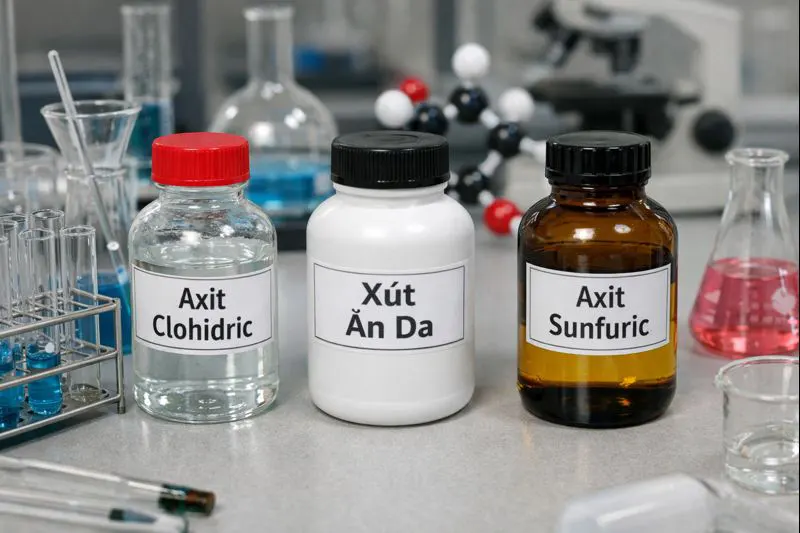
From left to right: hydrochloric acid, caustic soda (sodium hydroxide), sulfuric acid. Photo: KPTCHEM.
Grease drain unclogging chemicals work by breaking down the organic bonds between grease and debris and dislodging them from the surfaces where they adhere and cause blockages. Therefore, the main components of these products must be specially selected highly corrosive chemical compounds. Each brand has its own proprietary formula, for example, some products are designed specifically to break down grease, while others can also decompose hair and sludge. Among them, the core components are usually strong corrosive compounds, typically including:
Hydrochloric Acid (HCl)
Hydrochloric acid is one of the compounds with significant decomposing power and is often mentioned as a key ingredient in drain unclogging products. This acid can weaken and break down many types of stubborn buildup, ranging from long-accumulated grease, soap scum, and slime layers to hair, food particles, and small debris trapped along the pipe walls.
In commercial drain cleaners, the presence of HCl helps break the bonded structure of organic layers that have hardened inside pipes. The solution is usually poured directly into sinks or drains, where acid molecules come into contact with grease and penetrate each layer of buildup, gradually softening it and separating it from the pipe walls. As a result, the clog-causing material breaks down into smaller pieces and is easily carried away by flowing water.
Caustic Soda (NaOH)
Also known as sodium hydroxide, caustic soda is one of the important components commonly found in commercial drain cleaners. The presence of this strong base enhances the ability to treat various common blockages, from kitchen pipes clogged with grease and food waste to bathroom drains blocked by hair and soap residue, and even outdoor drainage systems where dirt has accumulated over time.
In addition, many people use NaOH as a standalone drain unclogging agent for sinks. Due to its highly corrosive nature, when it comes into contact with organic materials trapped inside pipes, it immediately triggers an exothermic chemical reaction. This reaction softens the buildup and breaks its structure, allowing it to detach from the pipe walls and gradually be flushed away by water. Dirt, tangled hair, grease, and food residue can all be treated in this way.
Sulfuric Acid (H2SO4)
One of the most hazardous chemicals, yet widely used in many applications. In commercial drain cleaners, sulfuric acid is used for its strong ability to attack and decompose organic matter such as hair, grease, fats, food residue, and paper waste. With its strong water-attracting properties, this acid rapidly disrupts the molecular structure of these substances, causing them to break down and flow more easily through pipes.
In addition to its decomposing ability, sulfuric acid also generates heat when reacting with water or organic compounds, which accelerates the breakdown of buildup. In commercial products, sulfuric acid is usually blended with additives to control reaction speed, reduce splashing, and limit pipe corrosion to acceptable levels. This helps ensure effective treatment while improving safety when used according to the manufacturer’s instructions.
Safety rules when using drain cleaners always include wearing gloves, a mask, and protective eyewear. These are the most basic protective items to help prevent chemical splashes from contacting your body during use. In addition, if clothing comes into contact with drain cleaner, discard it immediately without hesitation. Some grease drain cleaners generate intense heat while breaking down waste, so if toxic fumes rise from the drain or you feel throat irritation, hold your breath briefly and move quickly to a well-ventilated area.
Some recommended products for clearing grease-clogged drains
TThere are currently many brands of grease drain unclogging chemicals available on the market, and this can make you feel like you’re in a “maze” when choosing and not know which one to pick. Don’t worry — KPTCHEM would like to recommend some effective products you can consider!
EcoSock
Leading this list is EcoSock drain cleaning powder, a product that balances treatment effectiveness, user safety, and environmental friendliness. For consumers in Vietnam, EcoSock has long been a familiar name and is often mentioned as a proactive and sustainable solution for dealing with blockages, especially in pipes where organic waste has accumulated over a long period. The most notable feature of EcoSock lies in its ability to decompose and weaken the structure of buildup layers that are difficult to see with the naked eye. Solidified grease stuck to pipe walls, tightly tangled hair, food scraps bonded with grease, and even long-accumulated organic sludge can all be effectively treated by causing them to detach and transform into a form that can be easily carried away by wastewater flow.
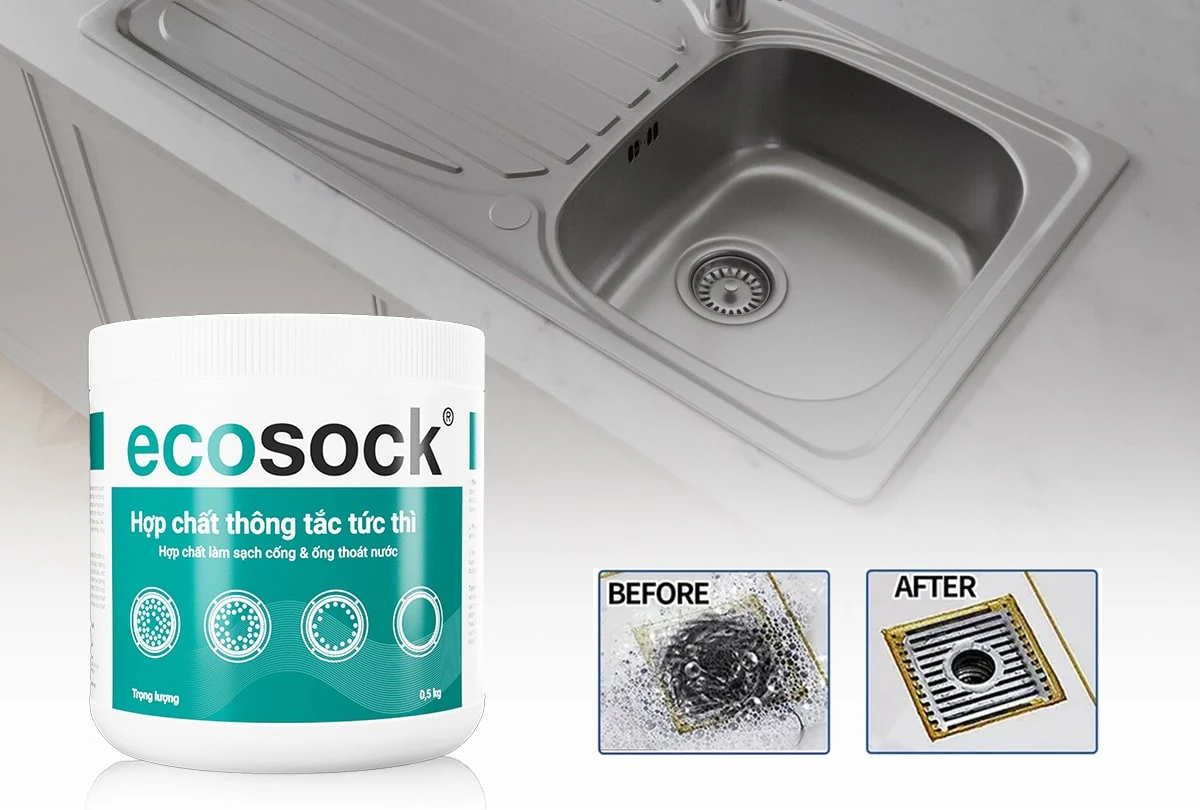
EcoSock drain cleaning powder. Photo: EcoClean Vietnam.
What makes EcoSock a popular choice is not only its cleaning performance, but also how it helps restore water flow in pipes in a stable and natural way. Instead of only dissolving the blockage at a single point, EcoSock loosens and breaks down buildup structures layer by layer, thereby reducing the risk of rapid re-clogging. When organic matter no longer forms strong adhesion points, the inner surface of the pipes becomes clearer, water flows more smoothly, and unpleasant odors gradually decrease.
In addition, EcoSock is highly regarded for its balanced approach between strong cleaning capability, safety for pipe materials, and environmental friendliness. Users can clearly notice improvements after each treatment, not through aggressive fuming reactions, but through faster drainage and pipes that are not corroded by chemicals. Moreover, the compounds are specially selected for organic decomposition and do not pose a danger when released into the environment with wastewater. This durability and long-lasting effectiveness have made EcoSock a familiar choice for maintaining stable and efficient household drainage systems.
Sifa
Sifa drain cleaner is chosen by many households as a flexible and quick solution when dealing with slow drainage or blockages caused by accumulated organic waste. Its strength lies in its ability to rapidly break down buildup and soften blockages such as congealed grease, food scraps, and soap residue. During the treatment process, areas prone to grease accumulation or organic adhesion are gradually cleaned, helping the inside of the pipes become more open. As water flows more easily without resistance, unpleasant odors from decomposing residue are significantly reduced, creating a cleaner and drier living environment.
What makes Sifa highly regarded is the balance between flexibility and practical effectiveness. However, users should always follow the manufacturer’s instructions carefully to avoid unwanted incidents.
Botek
This product is highly valued for its stability and its ability to thoroughly resolve stubborn blockages that are difficult to clean using conventional methods. When pipes have been coated with grease for a long time, simply flushing with hot water or applying household tips often does not produce clear results. Botek drain cleaning powder addresses this problem by acting on each accumulated layer in sequence, gradually reducing the thickness of the blockage and allowing water to flow naturally again. When the powder comes into contact with water, it begins to react, slowly penetrating deep into the dirt layers, breaking down adhesive structures and causing organic materials to lose their grip. As a result, water can wash away the decomposed waste and restore the pipe’s original flow capacity.
Sumo
The standout feature of Sumo is its ability to soften, decompose, and flush away long-standing buildup, especially solid masses formed from a mixture of paper scraps, hair, grease, and household residue that obstruct water flow. In practical use, this product is often appreciated for its proactive treatment capability, helping toilets and drains regain natural drainage without the need for heavy mechanical intervention.
In addition to clearing blockages, Sumo also helps reduce unpleasant odors, since improved water flow significantly decreases the amount of decomposing organic matter trapped inside the pipes. As a result, living spaces around bathrooms and kitchens become more comfortable.
Tracatu
Tracatu drain cleaning powder is considered by many to be an effective option when drainage begins to slow, unpleasant odors appear, or pipes become clogged due to organic waste buildup. Its strength lies in its ability to penetrate and break down long-standing deposits formed from grease, food scraps, soap residue, and tangled hair. When in contact with water, the powder particles gradually activate and penetrate small crevices along the pipe walls, breaking adhesive structures and softening organic waste.
This product is suitable for various household areas such as kitchen sinks, floor drains, bathroom sinks, and washing machine drain pipes, where organic buildup is the main cause of restricted flow. Naturally, since its main components are chemicals, following the usage instructions is essential to ensure user safety and protect pipe materials.
How to prevent grease from clogging drains
Normally, drains can become clogged again after only a short time, even after being cleared, because wastewater continues to flow into them every day. To prevent this, you need to stop grease and organic waste from entering the drainage system. For solid organic waste, you can use a filter mesh to catch it, but grease can mix with water and pass through the mesh. Therefore, it is necessary to use specialized grease-eating biological products such as EcoClean Drain or EcoClean FOG.
If chemical cleaners only work on the surface, like a drill piercing straight through an obstacle, fast but not thorough, then grease-eating microbes clean the remaining buildup completely from the root.
The process is as follows:
Step 1: Quickly clear grease clogs
This should be done as soon as possible so daily activities are not disrupted. The drain cleaners mentioned above can help you resolve the problem quickly and effectively. After use, the inside of the pipes is basically cleaned, and water can flow freely again.
Step 2: Keep the pipes free of grease buildup
We cannot use cloths to clean deep inside pipes, and overusing chemicals is not recommended. So how can we keep pipes clear over the long term?
The most common method is pouring hot water down the drain after each use. However, a more scientific approach is to use grease-eating microbes. These are biological products whose main components are billions of specially selected bacterial cells designed to break down organic waste.
When poured into pipes, these bacteria attach to the pipe walls and convert remaining grease deposits into energy for biomass growth, thereby thoroughly cleaning the pipes. Moreover, the bacteria continue to grow, and the organic waste that goes down the drain each day becomes their food source, allowing them to survive. It is no exaggeration to say that this is the most important step in preventing blockages. Almost all restaurants apply this method, yet it is often overlooked by households.
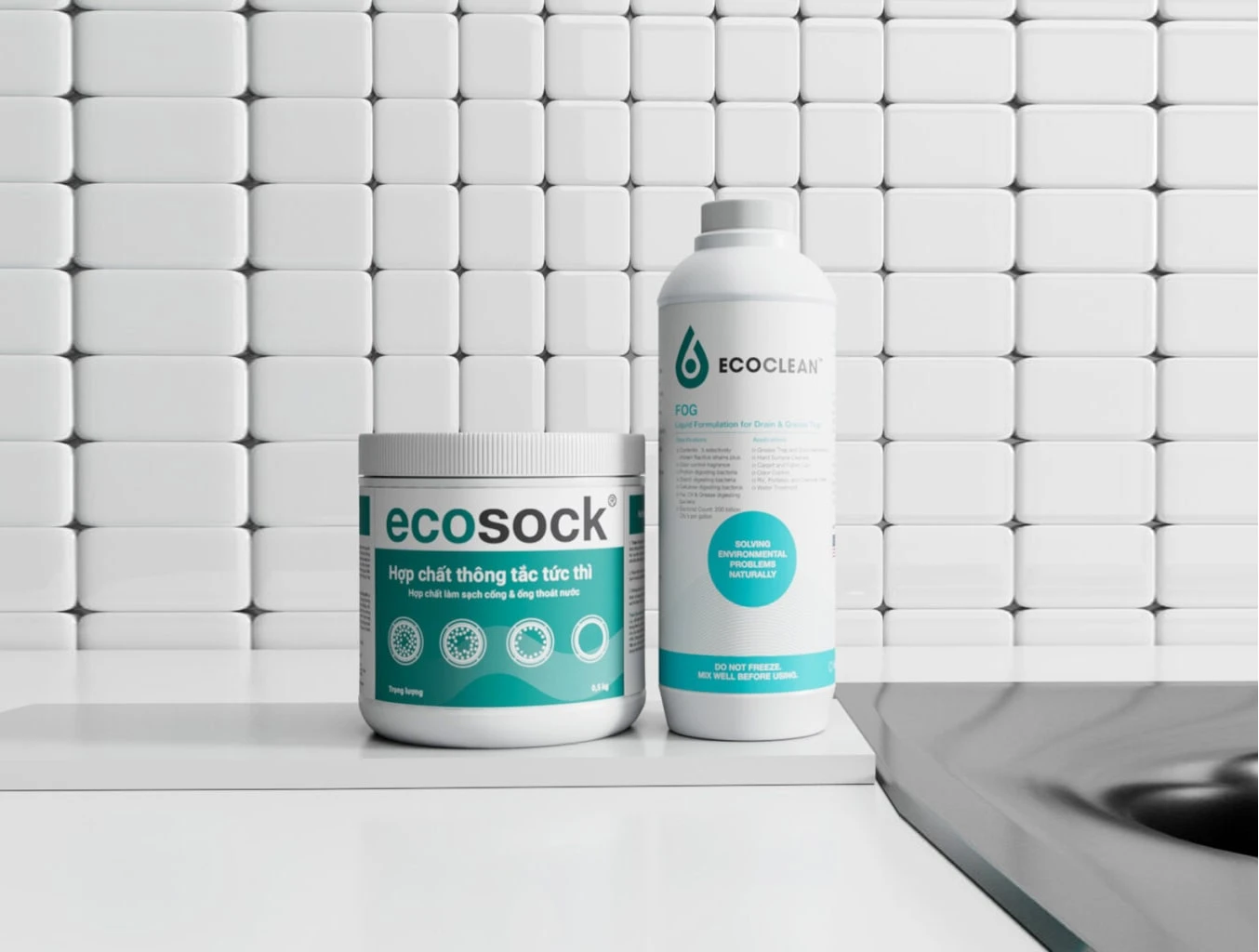
The combination of EcoSock grease drain cleaner and EcoClean FOG grease-eating microbes helps resolve blockages quickly while providing long-term, thorough results. Photo: EcoClean Vietnam.
Do not forget these important tips to keep your drains working well
-
Do not use chemical cleaners and biological products at the same time, as this may kill all the bacteria and prevent the treatment from being fully effective.
-
The best time to pour biological products into the drain is in the evening before going to bed, or when water usage for the day has stopped.
-
Although grease-eating microbes can thoroughly resolve grease buildup inside pipes, they cannot completely replace chemical cleaners. Over time, the number of bacteria will decrease, so you need to periodically add biological products to the pipes to prevent grease from building up again. If the drain is completely blocked or water flows very slowly, use a grease drain chemical cleaner immediately for fast, instant treatment.
-
PVC pipes are generally less susceptible to chemical corrosion than old metal pipes or flexible corrugated pipes. However, as long as you follow the instructions properly and ensure that the product you are using is safe for your plumbing system, there should be no problem. Therefore, it is best to ask sales staff for thorough advice when purchasing.
-
To prevent drains from clogging, avoid letting too much waste flow into them. You can do this by using strainers for sinks and floor drains to catch food scraps, hair, and debris; not pouring leftover grease down the drain; using paper towels to absorb oil before washing pans, pots, and kitchen utensils; and properly reusing cooking oil, which is both economical and helps reduce waste oil discharge.
Conclusion
When a drain is clogged, you can try simple household tips first. However, if they do not work, do not hesitate to use chemical drain cleaners. Using chemical pipe cleaners is not something to fear or avoid entirely, as long as you read the instructions carefully and pay attention to safety. They are a powerful solution for dealing with stubborn blockages in the home.
If you have tried every method and the drain is still stubbornly clogged, then the best option is to call a plumber. An experienced professional can handle the problem much more quickly and help save you a lot of frustration.

