In commercial applications, ammonia is commonly supplied in two forms: NH₃ gas and liquid ammonia. Depending on the intended use, businesses will choose the appropriate concentration and form.
Unlike many conventional chemicals, ammonia is highly volatile, has a strong pungent odor, and can irritate the eyes and respiratory system when exposed to high concentrations. It also requires proper transportation and storage procedures. Therefore, purchasing low-quality ammonia or storing it incorrectly may lead to issues such as:
-
Substandard concentration
-
Reduced performance and efficiency
-
Rapid loss due to evaporation
-
Equipment corrosion
-
Safety risks during use
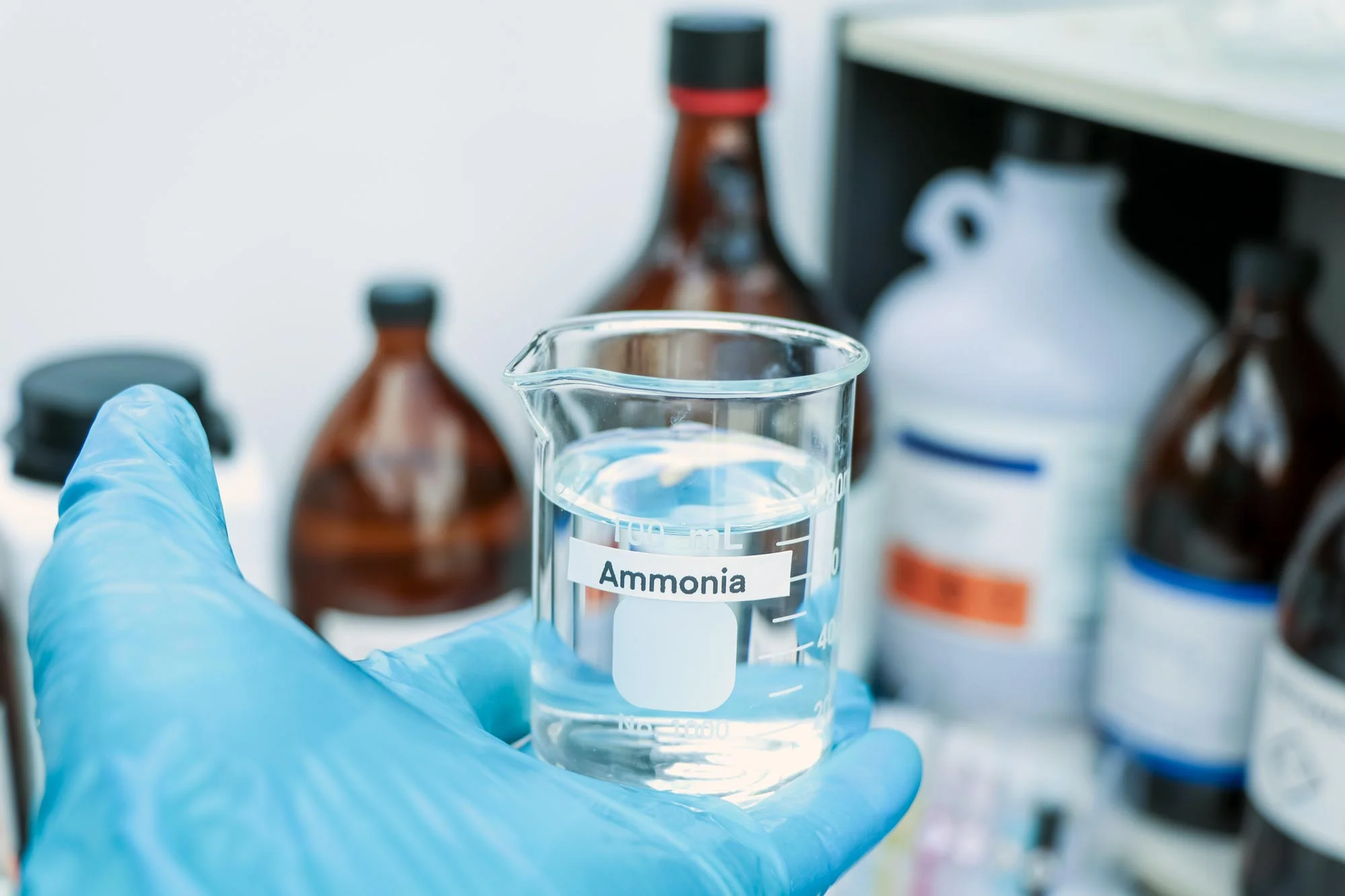
Ammonia is the second most traded chemical product worldwide. As a result, cases of purchasing low-quality products are quite common. Source: chemical industry / Shutterstock.
Important considerations when purchasing ammonia
In general, the factor most people pay attention to when buying chemicals, especially ammonia, is price. However, there are many other important factors to consider in order to make the right choice. Price differences often come with significant differences in quality. In many cases, low-cost ammonia may not meet standard concentration levels or may contain excessive impurities, affecting production processes and product quality.
1. Clearly identify the intended use
Many buyers tend to look for suppliers and ask for prices before fully understanding which type of ammonia is actually suitable for their needs. In reality, depending on the industry, operating system, and technical requirements, ammonia products may differ in concentration, purity, and specifications. For example, ammonia solution used in water treatment requires high stability and low impurity levels, while NH₃ used in industrial refrigeration systems serves as a refrigerant.
2. Check the concentration
A common misconception is that the concentration of ammonia can be judged by how strong or weak the odor is. However, this is not an accurate method. The smell can be influenced by environmental temperature, storage conditions, or evaporation during transportation. In some cases, a chemical may have a very strong odor but still fail to meet concentration standards because it has been diluted or contaminated with impurities.
Concentration is one of the most important yet often overlooked factors when purchasing ammonia. Even a small difference in NH₃ concentration can significantly affect efficiency, operating costs, and production stability. On the market today, ammonia solutions are available in concentrations such as 10%, 20%, 25%, or 30%, each suitable for specific applications. Therefore, businesses should clearly determine their actual needs instead of making decisions based solely on price or assumptions.
To verify concentration accurately, buyers should request all relevant documents from the supplier, such as CO, CQ, or COA certificates. These documents help confirm the concentration, purity, and other important technical specifications of the chemical. A reputable supplier will usually provide this information transparently rather than avoiding or giving unclear answers.
In addition to documentation, you should also observe the product’s stability after opening. If the ammonia evaporates too quickly, develops unusual sediment, or changes color within a short time, it may indicate unstable quality or improper storage conditions.
3. Choose a reputable supplier
In the chemical industry, unusually low prices can sometimes be a warning sign. Some products may be diluted to reduce costs or repackaged manually under unsafe conditions.
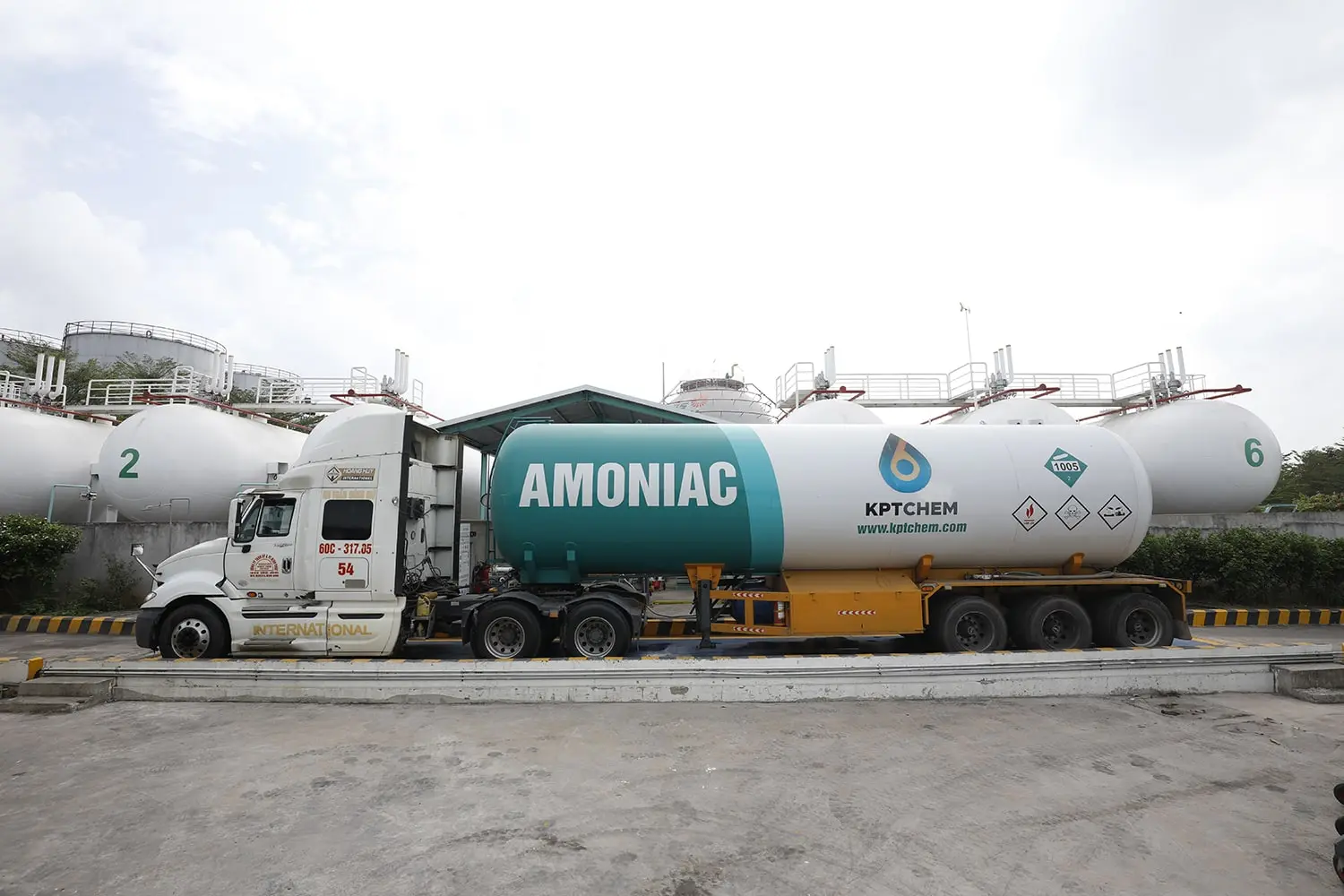
Image of a specialized tank truck transporting liquefied ammonia. Source: KPTCHEM.
-
Therefore, a reputable ammonia supplier will typically have transparent business information and also provide:
-
Technical consulting support: Experienced suppliers not only sell products but also understand them thoroughly. They usually have professional teams capable of recommending the right chemical for each customer’s needs instead of focusing only on making sales.
-
Complete chemical documentation (CO, CQ, COA, SDS, etc.): Transparency is one of the clearest signs of a trustworthy chemical supplier.
-
Proper packaging, transportation, and safe storage: Ammonia is highly volatile and has a strong pungent odor, so improper packaging may lead to leakage, product loss, or safety risks during transportation. Experienced suppliers often use suitable packaging, secure sealing methods, and professional transportation procedures to minimize risks.
-
Reliable after-sales service
-
Guaranteed product concentration
As the demand for ammonia continues to rise in agriculture and industry, choosing a reliable supplier becomes increasingly important for both efficiency and safety. KPTCHEM is proud to provide high-quality liquefied ammonia solutions for a wide range of applications, from fertilizer production and water treatment to industrial processes. With stable supply sources, transparent quality control, and a commitment to purity, KPTCHEM delivers reliable products along with tailored consulting solutions for every application. If you are looking for a long-term supplier of pure ammonia solution, KPTCHEM is a trusted choice worth considering. Contact us today for the best quotation on liquid ammonia!
4. Check the packaging and packing standards
Ammonia is a highly volatile chemical. If it is not packaged according to proper standards or the containers are not tightly sealed, the product can easily evaporate during transportation. This not only reduces the actual concentration but may also cause discomfort to nearby people, affect the working environment, and create potential safety risks.
Typically, ammonia solution is stored in plastic cans, HDPE drums, or specialized tanks depending on the order quantity. For large industrial orders, the product may be transported in dedicated tank systems to ensure stability and minimize evaporation. The key requirement is that the storage material must be compatible with the chemical properties of ammonia, resistant to corrosion, and capable of withstanding a certain vapor pressure.
Therefore, when receiving the product, you should:
-
Take a few minutes to inspect the overall condition of the packaging. A properly packaged chemical container should be sturdy, tightly sealed, free from dents, and show no signs of leakage around the cap. If you notice an excessively strong pungent smell even before opening the container, this may indicate vapor leakage or improper packaging.
-
Check that the product label is clear and includes complete information such as the chemical name, concentration, weight, safety warnings, manufacturing date, and supplier information.
Should you buy ammonia solution online?
Today, many chemical businesses have expanded to online platforms to reach potential customers. This benefits not only sellers but also buyers. By simply searching the internet with keywords such as “where to buy ammonia reliably,” “reputable ammonia supplier,” or “is KPTCHEM trustworthy,” customers can easily find detailed information about the chemical, suppliers, warehouse locations, real product images, operating history, and feedback from previous customers. This makes it much easier to choose a suitable supplier.
How should ammonia be stored?
Proper storage helps minimize evaporation and maintain product quality. Like many other chemicals, ammonia should be stored according to several general safety principles:
-
Store in a cool, well-ventilated place.
-
Avoid direct sunlight.
-
Keep containers tightly sealed.
-
Keep away from heat sources.
-
Do not store near strong acids or highly reactive compounds.
-
Keep away from living areas.

