Soap is one of the indispensable products in daily life and personal hygiene. Photo: Hackensack Meridian Health.
Since ancient times, soap has been closely associated with human life and has played an important role in protecting health, maintaining personal hygiene, and preserving the living environment. From ancient civilizations, people knew how to use primitive forms of soap to clean their bodies, clothes, and household items. Over time, along with the development of science and technology, soap has been increasingly improved in quality and functionality. To this day, soap continues to play an essential role in daily life.
So, have you ever wondered how soap is made, or why it is able to clean so effectively? In fact, the core process behind its creation is the saponification reaction, which determines the cleaning ability and directly affects the quality, safety, and effectiveness of the final product.
The concept and cleaning mechanism of soap
The saponification reaction is a chemical reaction that produces soap. In this process, animal or vegetable fats (triglycerides) react with a strong alkali solution to form glycerol and soap (fatty acid salts). To produce solid soap, a strong base such as sodium hydroxide (NaOH) is used, while the more expensive potassium hydroxide (KOH) is commonly used in the production of liquid and soft soaps.
We all know that water and grease are fundamentally incompatible and cannot dissolve in each other. Therefore, washing with clean water alone often cannot completely remove greasy stains that cling tightly to surfaces. However, with just a small amount of soap added, everything seems to change immediately, and a clear sense of cleanliness appears after each wash.
The secret lies in the special structure of soap, which is precisely what the saponification reaction creates. Each soap molecule has two opposing characteristics: one end is hydrophilic and easily dissolves and moves in water, while the other end is lipophilic and readily attaches to stubborn fat molecules. Thanks to this, soap acts as a bridge between water and grease. When many soap molecules surround a droplet of grease, they form small, lightweight spheres called micelles, which are then carried away by water, removing dirt and leaving surfaces clean.
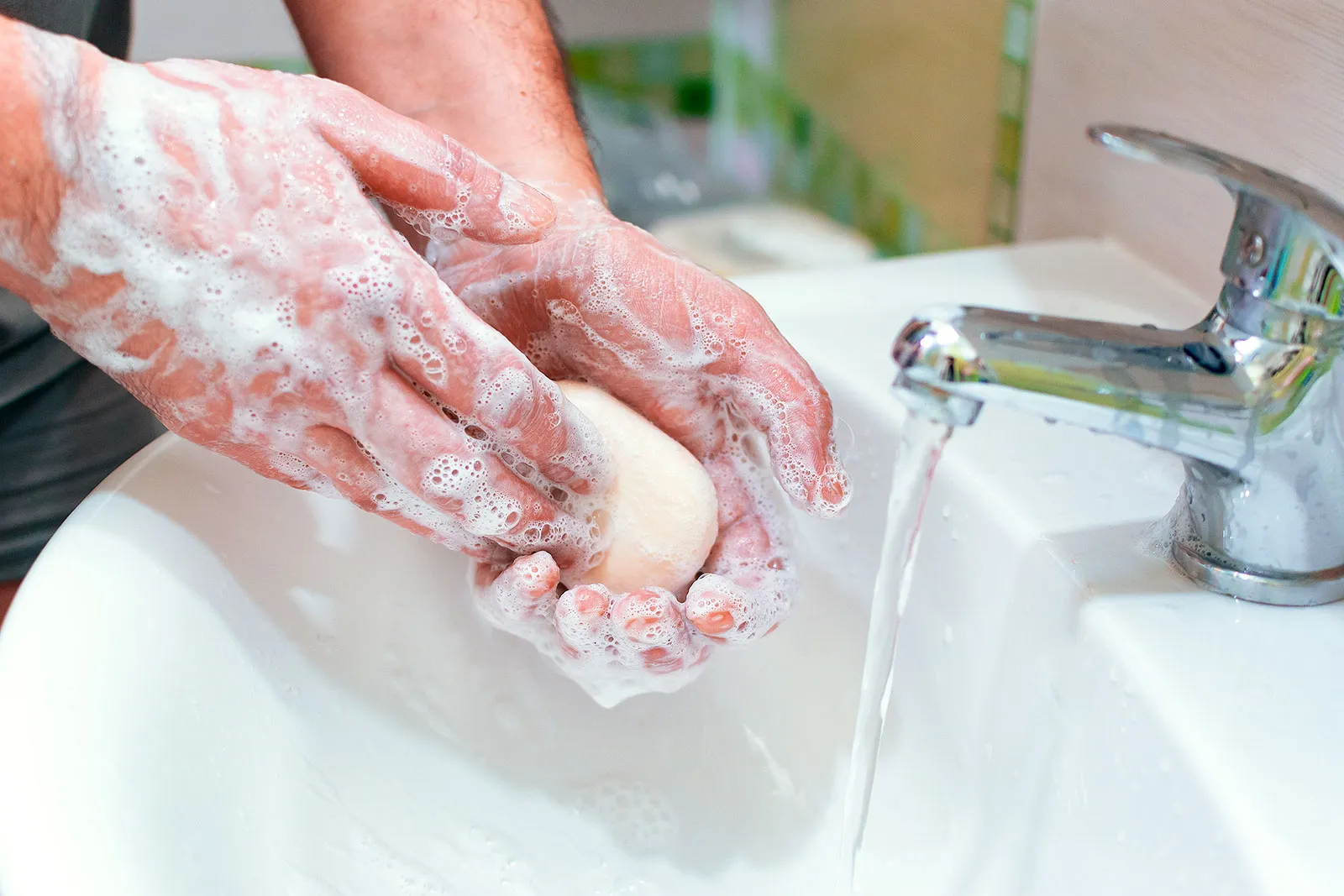
With the help of soap, dirt and bacteria adhering to the skin can be easily removed. Photo: Britannica.
Soap production process
In soap manufacturing, depending on the intended use, production scale, and purity requirements, the soap production process can be carried out in different ways. The two most common methods are the one-step process and the two-step process. Among them:
One-step process
As the name suggests, the entire saponification process takes place in a single stage, from adding the raw materials to obtaining the finished soap. First, the main raw materials are fats or oils derived from animal or plant sources. These oils are heated to a suitable temperature so they become liquid and more reactive. Next, an alkaline solution is slowly added to the oil mixture while stirring continuously.
When the alkali comes into contact with the fats, the saponification reaction begins. Triglyceride molecules in the oils are broken down to form soap and glycerin. In this process, the glycerin is not separated but fully retained in the soap mass, contributing to its moisturizing properties and gentle feel during use.
After the reaction is complete, the mixture gradually becomes thick and viscous, indicating that soap has formed. Manufacturers may add fragrances, essential oils, or natural colorants if desired. The soap mixture is then poured into molds, allowed to cool, and undergoes a curing period to harden, reduce excess alkali, and ensure safe use.
This is a simple, traditional method suitable for making handmade soaps, and is therefore commonly applied on a small production scale or in the production of natural soaps, where natural and artisanal values are prioritized. The resulting products have a “raw” character and contain natural glycerin, so they are often considered skin-friendly. However, because the process does not involve deep refining steps, soap quality can be inconsistent and difficult to control in large-scale production.
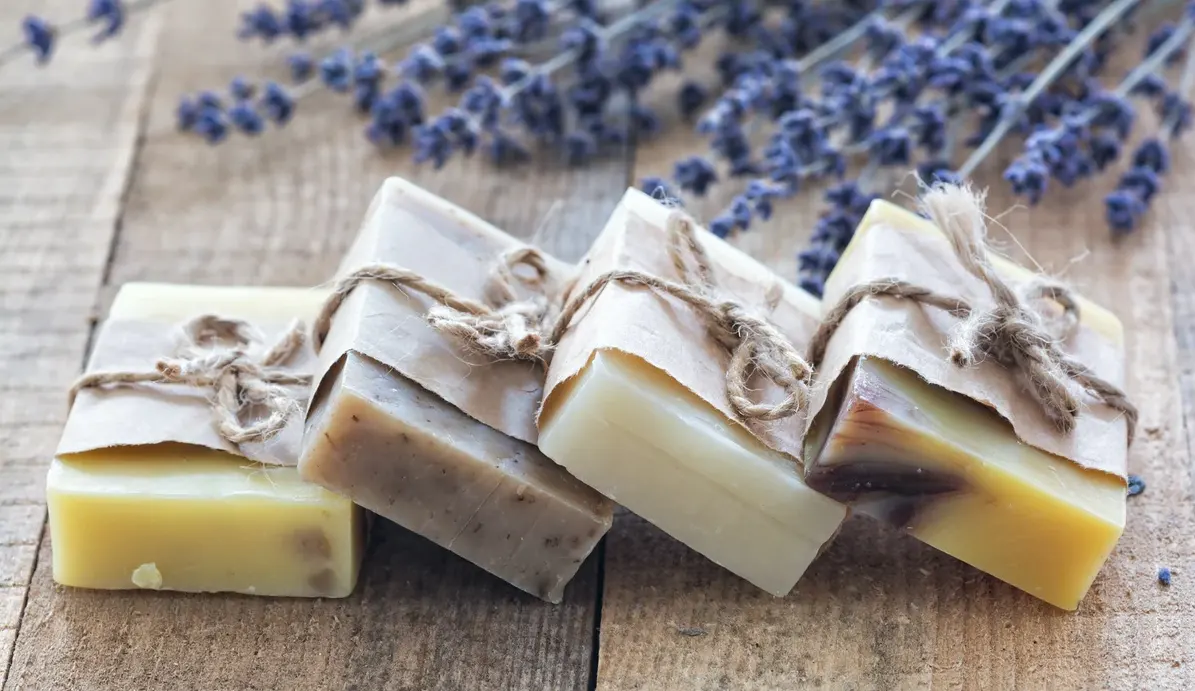
Handmade soaps are often produced through simple processes and emphasize natural values. Photo: Botanie Soap.
Two-step soap production process
The two-step process is a standard industrial soap manufacturing method, widely applied in factories thanks to its strict quality control, consistent product output, and optimized economic efficiency. Unlike the one-step, more artisanal process, this method separates the soap-forming stage from the refining stage, allowing manufacturers to actively adjust the composition and properties of the finished soap. Therefore, the two-step process is considered the optimal choice for large-scale industrial soap production, where high requirements for quality, consistency, and operational efficiency are essential.
In the first step, the main objective is to ensure that the saponification reaction takes place fully, stably, and under tight control, without placing emphasis on the product’s appearance or fragrance. Fats or oils, usually refined vegetable oils such as palm oil or coconut oil, are fed into a reactor and heated to an appropriate temperature. Next, a strong alkaline solution is added in a precisely calculated ratio. Under these conditions, alkaline hydrolysis of fats occurs, causing triglyceride molecules to split and form crude soap and glycerin.
Instead of becoming a finished product, this crude soap mixture then undergoes a refining stage to separate glycerin and impurities from the mixture. Typically, a sodium chloride (NaCl) solution is used to salt out the soap, causing the soap to rise to the surface while glycerin and the aqueous phase settle at the bottom. The glycerin is then recovered separately and further purified for use in higher-value industries such as cosmetics, pharmaceuticals, or food.
After glycerin separation, the soap portion continues to be washed, dried, and refined to remove residual alkali, water, and remaining impurities. At this stage, manufacturers can precisely adjust technical parameters to ensure the soap meets the desired purity, hardness, and stability. The soap may then be blended with fragrances, colorants, moisturizers, or other additives according to specific formulations, before proceeding to molding, shaping, and packaging.
How to choose skin-safe soap
After understanding the soap-making process, it can be seen that in reality there is no soap that is absolutely safe for everyone, including expensive products or those advertised as “natural.” A skin-safe soap is one that suits your skin type and usage purpose. However, below are some important reference criteria for you:
1. Prioritize soap with mildness suitable for the skin
First, it is important to know that human skin has a natural protective barrier with a pH of about 4.5 to 5.5. Meanwhile, soap is produced through the hydrolysis of fats in a strong alkaline solution, so the pH of soap is usually higher than that of the skin. This can strip away the natural protective oils, causing dryness, tightness, and even irritation, especially for people with sensitive or dry skin. Therefore, you should choose soaps with a pH that is not too high or that have been pH-adjusted to reduce alkalinity compared to traditional soaps.
In addition, not all soaps are suitable for every skin type. For example, if you have dry or sensitive skin, you should choose gentle soaps with good moisturizing properties and low foaming power. Oily or acne-prone skin may use soaps with stronger cleansing ability but still needs moisture balance. For babies, specialized products with high mildness and minimal ingredients are required.
2. Contains glycerin or moisturizing agents
Glycerin is an excellent natural humectant. Therefore, handmade soaps that retain natural glycerin are often considered safe for the skin. In addition, industrially produced soaps supplemented with glycerin or other moisturizing agents such as sorbitol, panthenol, or nourishing oils are also worth considering, as they help reduce dryness and skin flaking.
3. Clear and transparent ingredients
What matters is not whether a product is labeled “natural” or “organic,” but which specific substances may cause skin irritation and at what levels they are used. A skin-safe soap usually has a transparent ingredient list that is easy to look up and minimizes groups of substances that are likely to cause adverse reactions, especially for sensitive skin.
-
First are synthetic fragrances, which are among the most common causes of irritation. Fragrances can create a pleasant scent, but many fragrance compounds, including natural essential oils, can cause itching, redness, or contact dermatitis if used at high concentrations or on sensitive skin.
-
Next are artificial colorants. Synthetic dyes usually do not contribute to cleansing ability and mainly serve aesthetic purposes. For some people, especially children or those with delicate skin, these colorants may cause irritation or increase skin sensitivity with long-term use.
-
Another group to note is strong preservatives. In cleansing products, preservatives help extend shelf life and prevent microbial growth. However, some preservatives, when used at high concentrations or unsuitable for sensitive skin, can cause dryness, stinging, or irritation. Mild soaps often use gentler preservative systems or formulations that reduce the need for strong preservatives. Residual alkali remaining in soap is also an important irritant factor, as it can increase alkalinity and cause dryness or flaking during use.
-
Finally, choose products that match actual usage needs. Some soaps or cleansing products are designed for heavy grease removal and are suitable for laundry or industrial cleaning, but not for human skin. When used on the skin, these products can easily strip away natural protective oils, making the skin rougher and more prone to irritation.
Practical applications of the saponification reaction
Not only is this reaction the foundation of traditional soap manufacturing, it also has many important applications in modern life and industry. Thanks to its ability to convert fats into compounds with cleaning properties or ones that are easier to process, this reaction has been and continues to be effectively utilized in many different fields.
In daily life
The most familiar and common application is the production of soap and cleaning products that can emulsify and remove grease. From bath soap and laundry soap to household cleaning products, all are based on the principle of saponification. In addition, during the production process, glycerin generated from the saponification reaction is recovered and used as a moisturizing agent in skin creams, facial cleansers, shampoos, and many other skincare products. Thanks to its good hygroscopic properties, glycerin helps improve skin softness and safety.
Moreover, one useful but lesser-known application of the saponification reaction is in powder fire extinguishers (ABC type) that can put out grease fires. When sprayed, the chemical triggers the saponification of burning fats and oils into non-flammable substances. As a result, the fuel source of the fire is eliminated and the flames are quickly controlled. Furthermore, this reaction is endothermic and can absorb heat from the surrounding environment. This helps reduce the temperature of the fire, limit the risk of re-ignition, and increase fire-extinguishing effectiveness.
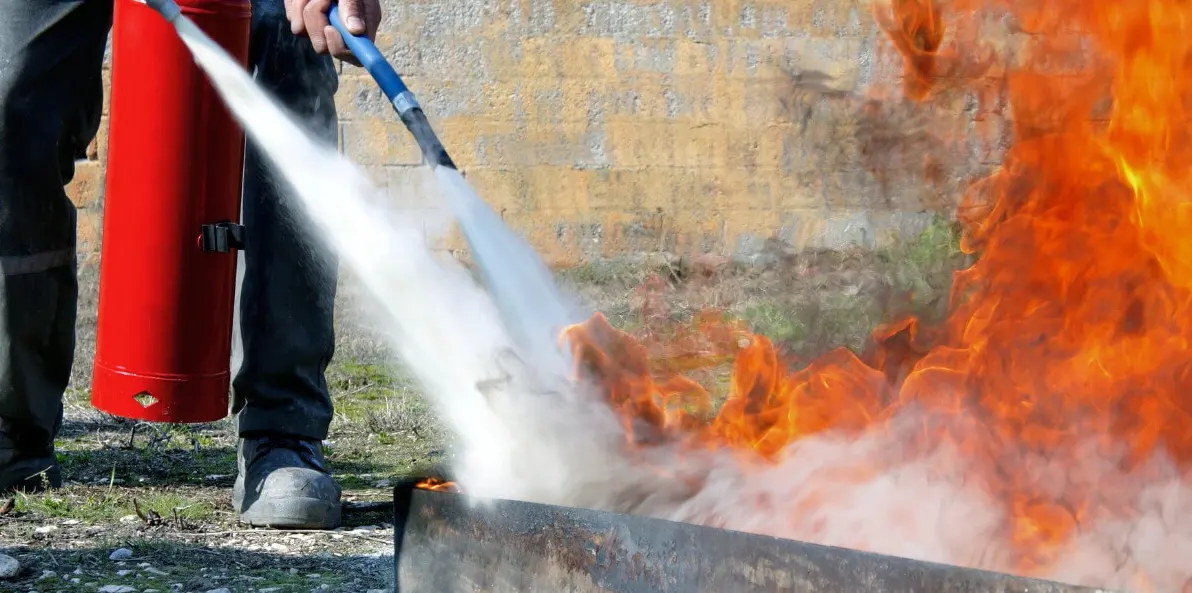
Saponification is also useful in firefighting. Photo: Swartz Fire & Safety.
In industry
The food and pharmaceutical industries use saponification values to determine the average molecular weight of fatty acids in oils and fats, thereby assessing the purity and origin of raw materials. This is an important indicator in product testing and standardization.
Another lesser known application is in the treatment of grease and industrial waste, helping convert hard to decompose oils and fats into forms that are easier to separate. This contributes to cleaning metal surfaces and mechanical equipment and supports the treatment of oil contaminated wastewater. In addition, some metal salts of fatty acids formed from the saponification reaction have high stability and are used as thickeners in lubricating greases, paints, printing inks, and waterproofing materials.
Conclusion
Thus, we have explored the saponification reaction and the indispensable role of strong bases such as NaOH and KOH in the soap production process. Choosing the right type of alkali and appropriate quality is a key factor that determines the effectiveness, safety, and quality of the final product.
If you need to purchase NaOH, KOH, or chemicals for soap production with clear origins and stable quality, please contact KPTCHEM for prompt consultation and support tailored to your production needs.

