Since ancient times, rainwater has been closely connected to human life. Not only used in daily activities, this water that “falls from the sky” has also been used for drinking and cooking, and many people believe it has a naturally fresh and slightly sweet taste that is good for health. Today, alongside well water and tap water, the habit of collecting and storing rainwater for use is still maintained in many households, especially in suburban and rural areas.
Of course, drinking rainwater is neither dangerous nor wrong, as long as the water is clean. Rainwater is inherently clean and can even contain fewer dissolved solids, chlorine, and impurities than tap water. However, scientists at Stockholm University, led by Professor Ian Cousins, reported that rainwater is now no longer safe to drink anywhere on Earth. This has raised an alarming question: is the rainwater people are using truly safe?
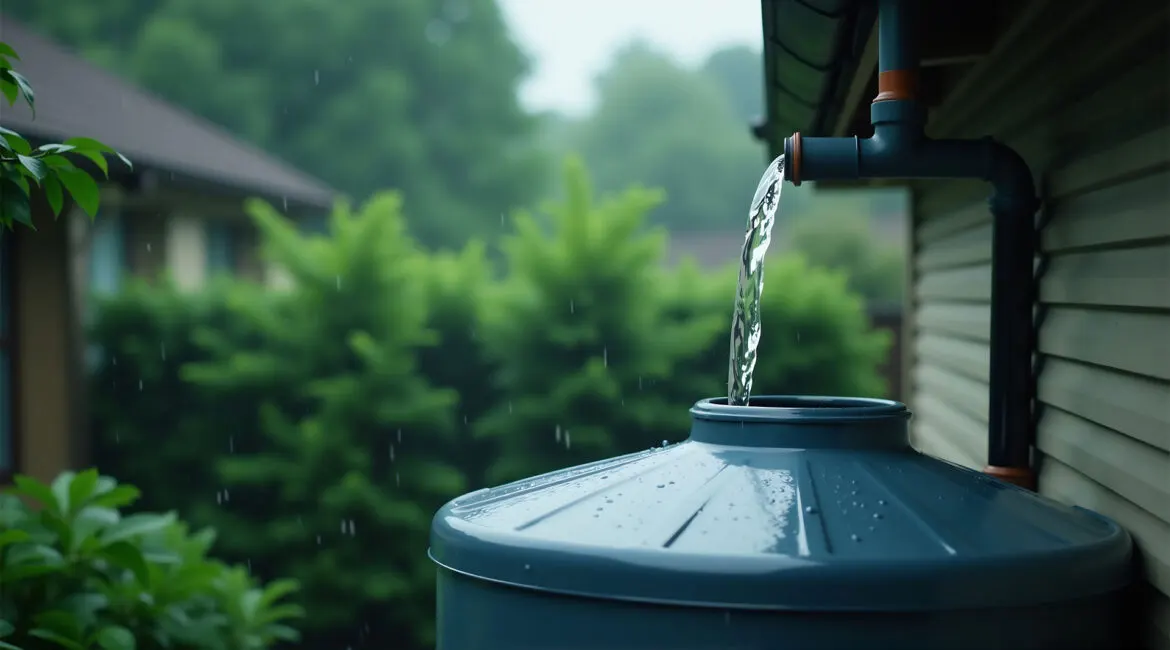
Rainwater has been part of human daily life for thousands of years, and that habit continues to this day. Photo: South Surrey Plumbing.
Is rainwater clean? Why shouldn’t we drink rainwater directly?
In reality, many communities around the world rely on rainwater as their primary source of drinking water. However, not all rainwater is clean and safe to drink. Certain natural and environmental factors can quickly turn rainwater into a potential health risk.
Although it may look clear and refreshing, rainwater contains carbonic acid, nitric acid, and sulfuric acid. It may also carry bacteria, pollutants, and harmful microorganisms. Throughout history, there have even been outbreaks of disease linked to the use of untreated rainwater.
Specifically, in the atmosphere, carbon dioxide dissolves into rainwater to form carbonic acid. During thunderstorms, nitrogen in the air is oxidized into nitrogen oxides, which then combine with water to form nitrous acid and nitric acid. In addition, sulfur in the air (even in small amounts) can be oxidized into sulfur oxides, which subsequently form sulfurous acid and sulfuric acid. As a result, rainwater can contain one or several of these acids at the same time.
Furthermore, the latest research from Stockholm University (Sweden) has found that rainwater in most places on Earth contains dangerous levels of so-called “forever chemicals” (PFAS). These substances are associated with serious health issues, including cancer, hormonal disruption, and immune system disorders. Among them, perfluorooctanoic acid (PFOA) is considered a hazardous chemical linked to cancer in humans.
In addition, fine dust, bacteria, and airborne particles can be washed down along with rainwater, significantly reducing its quality. Early-season rainfall is especially risky because it carries industrial emissions, chemical vapors, and large amounts of accumulated dust from the air. Later on, when the air has been partially “rinsed,” the level of pollutants decreases, but the natural acidity of rainwater still remains. For these reasons, rainwater is not suitable for direct drinking unless it has been properly treated.
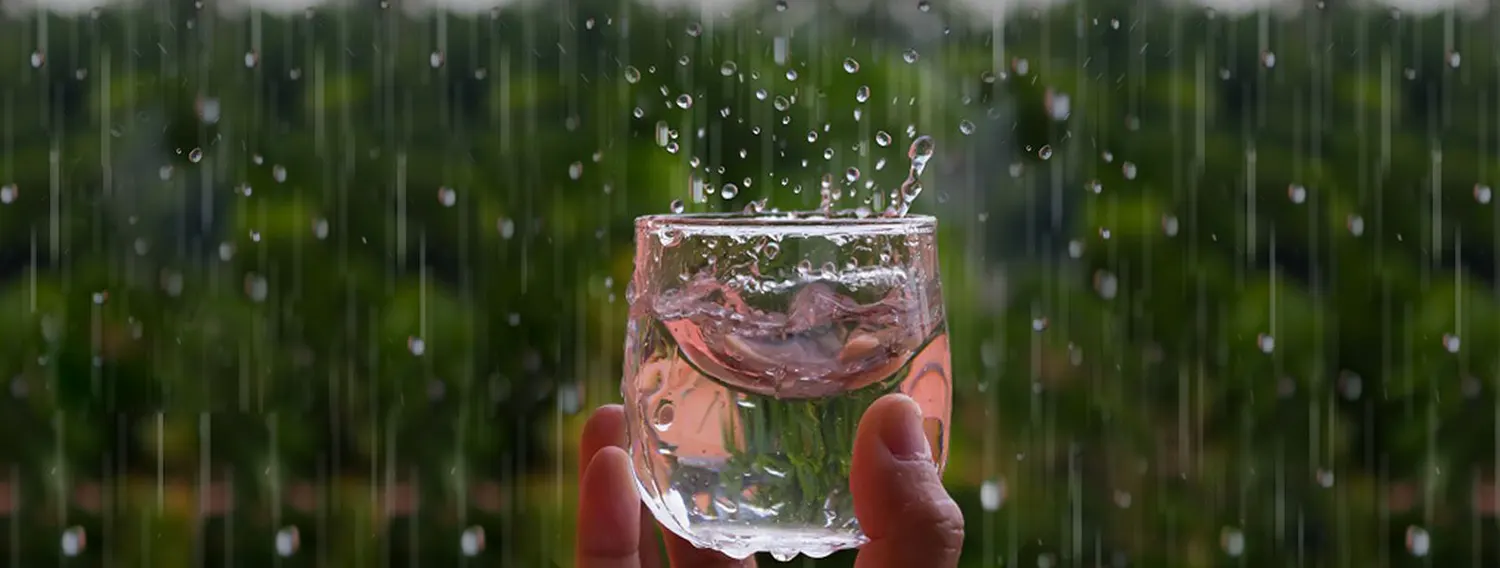
Although rainwater may look clean and clear, it is no longer safe to drink. Photo: H2O Global News.
Is drinking rainwater good for your health?
The truth is that, up to now, there is still no scientific evidence showing that rainwater provides greater health benefits than standard tap water that is safe for drinking.
If you do a quick search online about the benefits of drinking rainwater, you will easily come across many claims suggesting that it is a more “natural” and healthier choice compared to other water sources. However, most of these statements have not been supported by reliable scientific evidence.
In fact, drinking rainwater that has been properly collected and treated can hydrate the body just like other clean water sources, but there is no scientific basis to show that rainwater offers superior health benefits compared to standard tap water or filtered water.
One of the most common arguments is that rainwater is more alkaline than tap water, which supposedly helps increase blood pH and makes the body more “alkaline.” However, this idea is not accurate from a physiological perspective. Neither drinking water nor daily food can significantly change blood pH, because the human body has a very strict regulatory system that maintains blood pH at around 7.4. Many vital functions depend on this stability, and any noticeable change in blood pH is usually a sign of serious health problems, not the result of ordinary eating or drinking. Moreover, rainwater is not alkaline water. On the contrary, it is usually slightly acidic, with an average pH of about 5.0 to 5.5, and it can be even more acidic if collected in areas with high air pollution.
Some other claims suggest that drinking rainwater improves digestion or helps detoxify the body more effectively. In reality, these are general benefits of drinking enough clean water, not unique properties of rainwater. In other words, any clean and safe water source will provide the same benefits to the body.
How can rainwater be made safer to use?
Although rainwater is naturally quite pure, in today’s environmental conditions, using untreated rainwater still carries many health risks. To make rainwater safe for drinking, the most important steps are proper collection, treatment, and storage.
First, rainwater is only truly clean when it is collected directly from the sky before coming into contact with any surface. Collecting water that runs off rooftops, gutters, trees, or buildings can contaminate it with dust, bacteria, metals, and chemical residues. One important note is to discard the first few minutes of rainfall, because this is when most airborne pollutants are washed down. It is best to use clean, non corrosive, and odor free containers such as stainless steel, glass, or food grade plastic. In my hometown, large clay jars are commonly used to collect rainwater.
At this stage, the water can be used for bathing, washing, or watering plants. You can also cover the container tightly and use the water gradually, which is considered a way to reduce household water bills.

Although it should not be consumed directly, rainwater can still be used for household purposes and irrigation. Photo: RTE.
However, if you want to use rainwater for drinking or cooking, it needs to go through several stages to ensure safety. Specifically, after collecting rainwater, let it sit in a container for about 30 minutes to one hour so that dust, large particles, and heavy sediments can settle to the bottom. When taking the water for use, handle it gently and avoid disturbing the sediment layer.
Next, the rainwater should be filtered to remove fine particles, pollen, mold spores, and remaining organic debris. Filtering can be done using simple methods such as multilayer clean fabric, coffee filters, or household water filter pitchers. Keep in mind that filtering only improves clarity and removes debris, and cannot eliminate bacteria or viruses. For that reason, boiling is a required step before drinking rainwater. Bring the water to a rolling boil and keep it boiling for at least one minute to kill most bacteria, viruses, and parasites that may be present. In areas with poor environmental conditions or suspected contamination, boiling for a longer period can increase safety. It is important to note that boiling does not remove dissolved chemicals or heavy metals, so filtering before boiling provides better overall results.
After boiling, the rainwater should be allowed to cool naturally and stored in clean containers with tight lids. Improper storage can cause the water to become contaminated again by bacteria from the environment or storage equipment. Treated water should be used within 24 hours at room temperature, or within 2 to 3 days if stored in the refrigerator.
Overall, when collected directly, carefully filtered, properly boiled, and stored correctly, rainwater can become a safe drinking source in necessary situations or for backup use. However, for young children, the elderly, pregnant women, and people with weakened immune systems, water that has been quality controlled is still the preferred long term choice.
Summary
Although rainwater is easy to collect, it is not always safe to drink directly. During its formation, rainwater can become contaminated with pollutants, bacteria, and parasites that can harm health if not handled properly. Filtering, boiling, and proper treatment can make rainwater safer, but it should only be used when collected and monitored in a reliable way. Containers used to store rainwater must also have tight lids to prevent mosquitoes from breeding, since they can spread dangerous diseases such as dengue fever.
You also do not need to worry about drinking rainwater for health benefits, because there is still no scientific evidence supporting that idea. The most important thing is to drink enough clean and safe water every day in order to maintain health and balance in the body.

