According to current statistics, almost all households in cities and densely populated areas have been supplied with tap water. However, drilled well water is still considered an “irreplaceable” domestic water source for many families, especially those living in provinces or suburban areas. They continue to prefer using well water for many reasons related to habits, perceptions, and practical conditions. First, well water often gives a more natural, “cool and sweet” taste and is easier to drink thanks to the natural mineral content present in groundwater. Many long-established families are accustomed to this taste, so they tend to trust the water source they extract themselves. In addition, the cost of using well water is very low, mainly limited to electricity for pumping. Therefore, for households with high water usage such as livestock farming, irrigation, or small-scale production, well water becomes an economical choice.
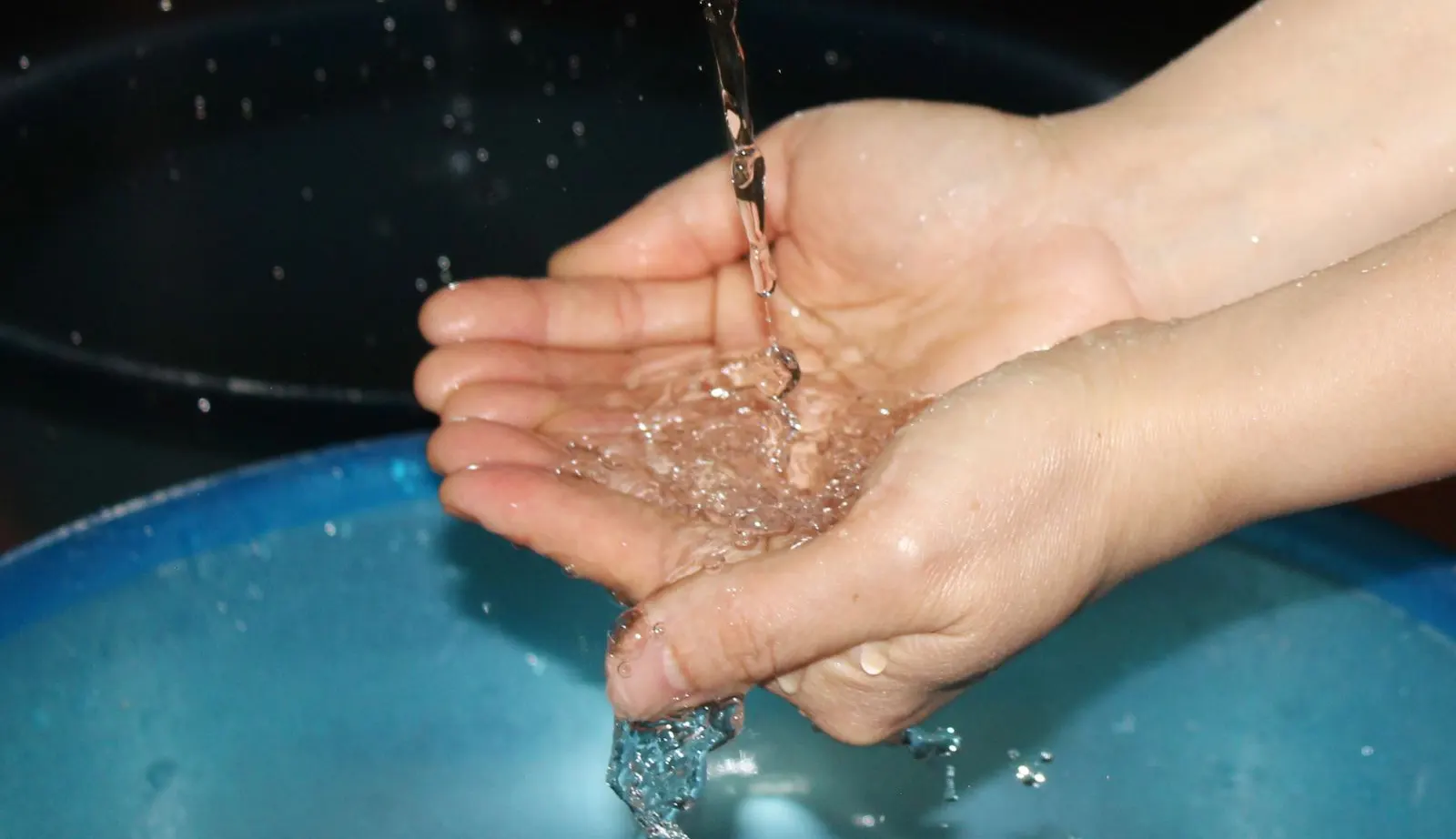
Using domestic water sources from drilled wells is still very common in many Vietnamese households. Photo: FPTShop.
Another reason lies in psychology and real-life experience. Sometimes tap water has a slight chlorine smell, fluctuating water pressure, or sudden water outages, which many people find inconvenient. In many rural or suburban areas, stable tap water supply is still unavailable, so well water becomes the main source and gradually forms a long-term habit of use.
However, not all “natural” water sources are safe. For example, in areas with acidic soil, salinity intrusion, or industrial pollution, groundwater may contain heavy metals or high levels of microorganisms and needs to be tested and filtered before use. Among these, iron-contaminated water is the most typical issue. That is why methods for removing iron from well water always attract great attention from families using this water source. Iron-contaminated domestic water not only greatly affects daily life, damages pipes and equipment, but also raises serious concerns about health when poor-quality water is used over a long period of time.
These uncomfortable experiences and concerns are exactly why treating iron-contaminated well water before use is extremely important, in order to ensure clean and safe water and provide peace of mind in daily activities.
Causes of iron-contaminated water and how to identify it
Iron contamination in water mainly originates from geological conditions and the surrounding environment of the water source. In nature, many soil layers contain iron ore, aluminum ore, or sulfate minerals. When these layers come into contact with rainwater or surface water, or are oxidized under low pH conditions, these metals dissolve into the water. When wells are drilled through such soil layers, the extracted water is easily contaminated with iron ions. At first, the water may be colorless, but it quickly oxidizes and turns yellow-brown when exposed to air. In addition, areas with many ponds, swamps, acidic soils, or high levels of decomposing organic matter also make groundwater prone to similar conditions. Some human-related factors such as drainage systems, wastewater leakage, metal corrosion, or old pipelines also contribute to increased iron content in domestic water.
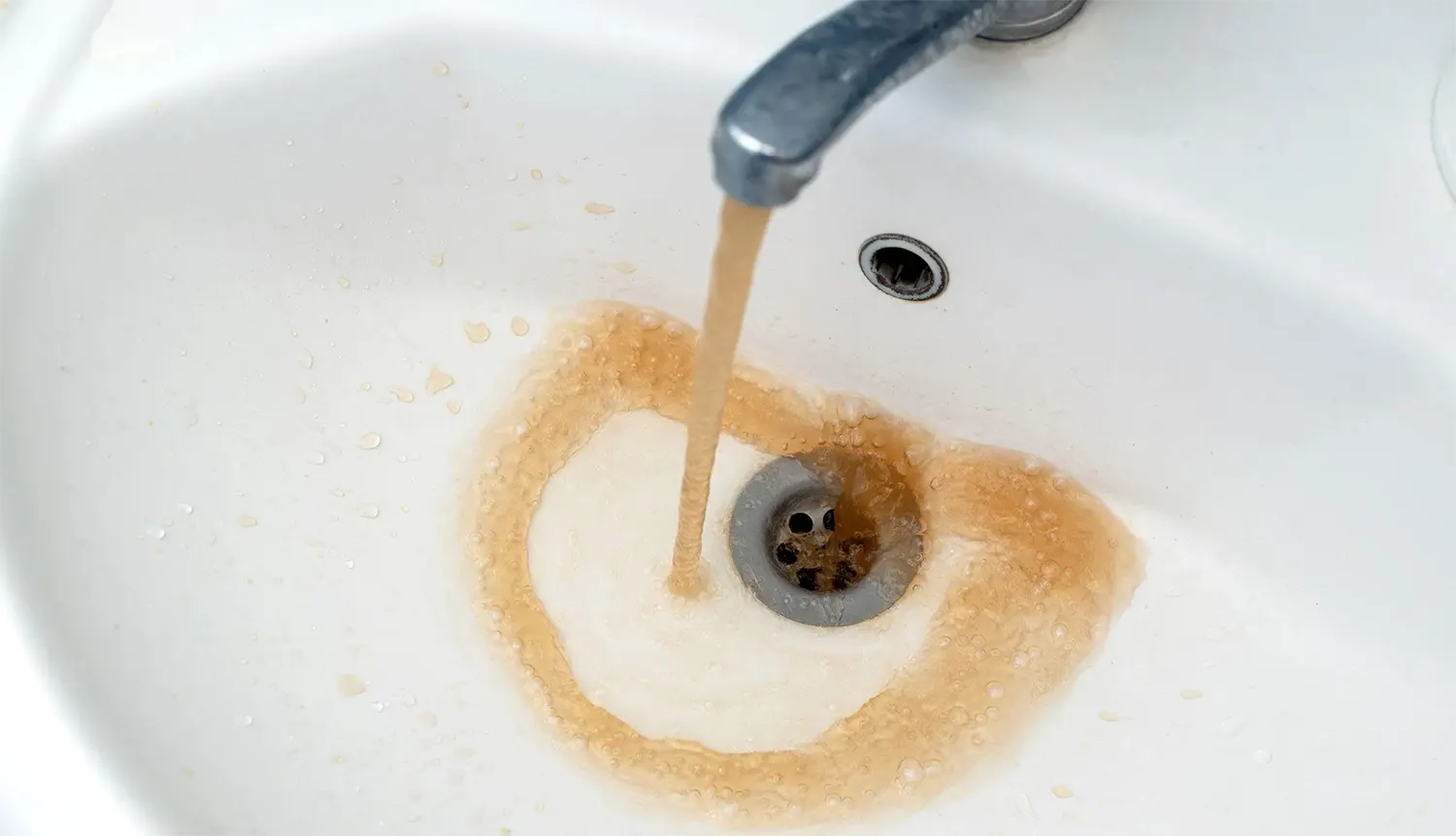
Water with unusual color and odor is a simple sign to identify iron-contaminated water. Photo: Culligan Quench.
Identifying iron-contaminated water is quite simple if you observe carefully during daily use. The most common sign is that the water appears clear when first pumped but after 5 to 10 minutes turns light yellow, orange-yellow, or reddish brown due to iron being oxidized and forming Fe(OH)₃ precipitate. Iron-contaminated water often has a slight metallic or muddy smell. When boiled, yellow residue may stick to the bottom of the pot or a thin film may appear on the surface. Metal objects exposed to iron-contaminated water for a long time are prone to rust, while pipes and faucets may accumulate yellow-brown scale. In addition, clothes washed with iron-contaminated water are likely to turn yellow, become stiff, and have an unpleasant odor. When tested with soap, iron-contaminated water often produces little foam because iron and aluminum ions reduce the effectiveness of surfactants. These are all visual signs that help you detect the problem early and take action to protect your health and household equipment.
Therefore, during use, you should monitor the water regularly. If you notice abnormal color changes, unusual odors such as metallic or musty smells, thick yellow deposits, or reduced performance of water filters, you can try some of the treatment methods below.
Common and effective methods to remove iron from well water
Regardless of the method, the general principle of treating iron-contaminated well water is based on the following process:
-
Oxidation of Fe²⁺ → Fe³⁺ → formation of Fe(OH)₃ precipitate when exposed to oxygen.
-
Sedimentation and filtration to retain iron precipitates.
-
Adsorption or ion exchange using specialized filter media to remove remaining iron.
This entire process forms a continuous cycle: oxidation of iron or manganese ions → precipitation → retention by filter media → obtaining clear, odorless, colorless water. This is the most basic and widely used iron removal principle today because it is safe, low cost, and suitable for most drilled well water sources in Vietnam.
Using alum to treat iron-contaminated water
This is a low-cost, effective, and easy method to perform at home. It can be used to treat well water, pond water, or rainwater contaminated with iron and fine suspended particles. That is why this method is still widely used today.
The procedure is very simple. First, scoop a small container of water to be treated, add alum, and stir until it completely dissolves into a clear solution. Then pour the dissolved alum solution into the larger tank or container. Stir the water for 10 to 20 seconds and then stop to allow coagulation to begin. Within 5 to 10 minutes, flocs will form, grow larger, and begin to settle. After about 25 to 40 minutes, the upper layer of water will become noticeably clear. If the water is very turbid, it may take 1 to 2 hours to fully settle.
However, if previously you used alum with arbitrary dosages, today you should try applying proper techniques to see if the water becomes clearer.
First, determine the turbidity and iron contamination level of the water source. For lightly contaminated water, only a small amount of alum is needed. For heavily yellow water with strong metallic odor or thick organic sediments, a higher dosage is required. The most common practice is to dissolve alum first, avoiding throwing solid alum directly into the tank, as this makes it difficult to dissolve evenly and may cause localized residue.
The commonly used dosage ranges from 10 to 20 g, equivalent to 1 to 2 tablespoons of alum per cubic meter of water. For heavily turbid water, it can be increased to 30 g per cubic meter, but overuse should be avoided to prevent residual alum that causes astringent taste and discomfort.
After sedimentation is complete, use a ladle or pump to collect the upper layer of water, avoiding disturbance of the sediment at the bottom. The settled sludge should be removed periodically to prevent odor development in the tank and reduced effectiveness in subsequent treatments. However, alum only addresses turbidity and iron precipitation and does not disinfect. If the treated water is intended for drinking, it should be further filtered through sand, activated carbon, gravel, or a household water filter system.
Traditional filtration tanks
For long-term water storage, filtration tanks are a more optimal solution than using alum alone. The structure of an iron removal filtration system includes a spray aeration unit that allows well water to contact oxygen and oxidize iron, a sedimentation tank where precipitates settle, and a filtration tank containing layers of filter media such as quartz sand, activated carbon, gravel, feramic, filox, birm, iron removal media, and similar materials. After filtration, the water is typically clear, free of metallic odor, and does not leave yellow stains when stored in basins or kettles.
Although the construction cost of filtration tanks is relatively low, their effectiveness is high for most well water sources, and they are durable and easy to operate. The main drawback is the need for installation space, so this method is mostly applied in rural households or homes with sufficient land. For urban houses or areas where large filtration tanks cannot be built, a composite filter column system is a more suitable solution.
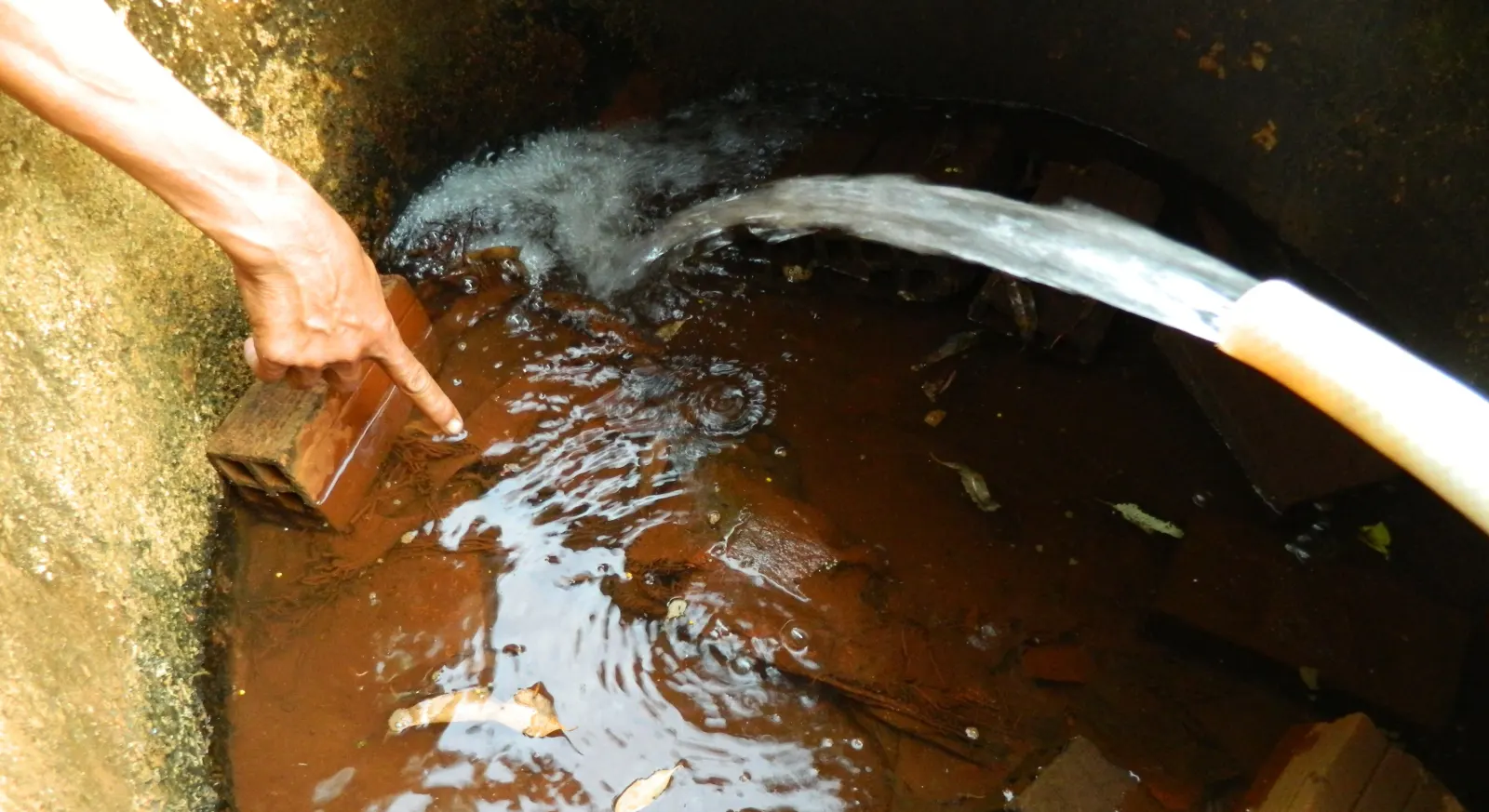
A traditional iron-removal water filtration tank commonly used. Photo: locnuoc247.
Removing iron from drilled well water using chlorine or Javen solution (NaOCl)
The operating principle is based on oxidizing Fe²⁺ and Mn²⁺ into precipitated forms Fe³⁺ and MnO₂. At the same time, chlorine kills bacteria in the water, making it cleaner, reducing the characteristic metallic odor of iron-contaminated well water, and making it safer for daily use.
Although this iron treatment method is one of the common chemical methods for treating iron-contaminated well water, especially effective for water with high iron and manganese content and requiring disinfection, it is only suitable for collective wells, boarding houses, large domestic water storage tanks, or water that needs rapid disinfection. It is not recommended for direct use in small households without filtration systems and chlorine concentration measuring equipment, as controlling residual chlorine is very important.
To carry this out, suitable chemical concentrations must be prepared first. For example, commonly used Javen solution has a concentration of 3–5% NaOCl. The typical dosage for treating mild to moderate iron contamination in well water is 1–3 ml of Javen solution per 1 liter of water, depending on iron content, manganese content, and turbidity. When well water is pumped into a storage tank or intermediate tank, the chemical solution is diluted and evenly distributed into the water, then gently stirred to ensure uniform mixing.
The waiting time for precipitates (yellow-brown and dark brown) to form is usually about 30–60 minutes. During this time, the water should have sufficient oxygen contact and strong agitation should be avoided. This process not only reduces color and metallic odor but also facilitates the removal of suspended solids in subsequent sedimentation or filtration steps. After that, the water needs to pass through a filtration tank to completely remove the precipitates. The filter tank may use quartz sand, gravel, activated carbon, or specialized catalytic media such as Birm or Filox to retain remaining iron and manganese and improve water clarity. Finally, the residual chlorine level in the water must be controlled to ensure it does not exceed safe limits for domestic use, usually around 0.2–0.5 mg/L, to avoid pungent odors or health effects.
Some effective folk methods
-
Using lime (CaO): Lime helps increase pH, causing iron to precipitate faster. Simply add an appropriate amount of lime to the storage tank, stir well, and let it settle for 4–8 hours.
-
Storing water in a tank before use: Allowing water to contact air helps iron precipitate naturally.
Hopefully, with the above sharing, you can know how to handle the situation if you discover that the drilled well water you are using is contaminated with iron. In addition, you can also share these methods with neighbors or others facing similar issues so everyone can use clean and safe water. Good luck!

